Gas Management Systems in Midland, TX
Effective gas control is essential for safe and efficient drilling operations. Gas Management Systems are used to extract entrained gasses from drilling fluids, helping to maintain equipment performance and reduce risk. Below are some of the top solutions available.

VAK 500®/1000®/1200® Vacuum Degassers
The VAK series of vacuum degassers is engineered to handle gas-laden drilling fluids by removing air, CO2, hydrogen sulfide, and methane. These systems are built for heavy-duty field use and deliver reliable performance in demanding conditions.
Features
- Robustness: Outfitted with a 5 hp TEXP motor designed for sustained use in harsh settings.
- High Performance: Reaches vacuum levels of up to 29″ Hg, suitable for thick, gas-heavy fluids.
- User-friendly: Start-up is quick and easy with a push-button interface.
- Compact and Durable: Mounted on a skid with a corrosion-resistant interior for long-term durability.
- Reliability: Fewer moving components reduce potential downtime and simplify upkeep.

Motor Power
TEXP 5 hp motor with a starter and fan guard.
Performance
Can achieve up to 29″ Hg, ideal for viscous fluids.
Safety
Includes a fail-safe overflow valve and a low-maintenance float assembly.
Convenience
Easy access points for maintenance and a compact design for straightforward placement.
Atmospheric Degassers
PSI Atmospheric Degasser offers a space-saving, reliable method for gas removal from drilling fluids. With a powerful 10 hp motor and rugged construction, this system delivers consistent results in a range of drilling conditions.
Features
- Efficient Operation: Processes up to 600 GPM and controls fluid density to within 16 PPG.
- Versatility: Two models are available for different pit depths.
- Safety and Durability: Outfitted with an explosion-proof motor and starter system for secure operation.

Quality
Made with 95 Shore A durometer polyurethane, offering heat and abrasion resistance.
Flow Rate
Ensures 500 GPM, effectively removing sand-size solids ranging from 40-100 microns.
Maintenance
Fast and straightforward cleaning, with replaceable parts.
Readiness
Shipped fully assembled and ready for installation.
Mud Gas Separators
Mud Gas Separators are essential for venting high volumes of free gas from drilling fluids before surface tanks are affected. These separators play a key role in ensuring process safety and protecting downstream equipment.

Areas We Serve
Process Solutions International proudly serves the energy sector in Midland and throughout West Texas. We also provide expert support to clients in New York, Saudi Arabia, and all GCC nations. Our commitment to delivering proven gas management systems makes us a trusted partner across global markets. Let us help you enhance the safety and efficiency of your operations in Midland and beyond.
Contact Us
Whether you need vacuum degassers, atmospheric degassers, or mud gas separators, Process Solutions International delivers high-performance systems for drilling safety and reliability.
VAK 500®/1000®/1200® Vacuum Degassers
The VAK Degasser robustly removes 99.9% of entrained air and gases like methane from drilling fluids, powered by an industrial-grade motor. This self-contained, skid-mounted unit efficiently manages high-viscosity fluids, offering up to 29″ Hg of vacuum.
Atmospheric Degassers
The PSI Atmospheric Degasser efficiently removes entrained gases from drilling fluid using a 10 HP motor and a unique separation tank technique. Available in two models to accommodate different pit depths, these compact units are made of high-quality steel and feature explosion-proof components, ensuring safe and durable operation.
Mud Gas Separators
Mud gas separators are devices used to separate and safely vent large pockets of free gas from the drilling fluids in well-drilling operations. They prevent gas blowouts and ensure safe and continuous drilling.
Product Categories

Industrial Pumps
Industrial pumps move liquids and slurries for various applications in water treatment, wastewater management, food processing, manufacturing, factories, plants, and worksites.
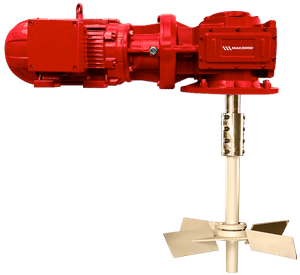
Material Handling Equipment
This category includes three essential products that cater to various material handling needs: the MAX2000 Mud Agitators, Screw Conveyors, and High Shear Hoppers.
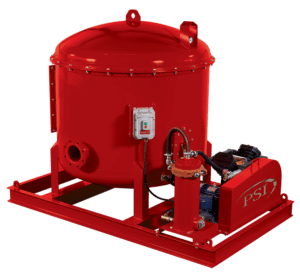
Gas Management Systems
Gas management systems are vital for controlling the entrained gasses during these operations. Here’s a closer look at some of the top systems in this category.
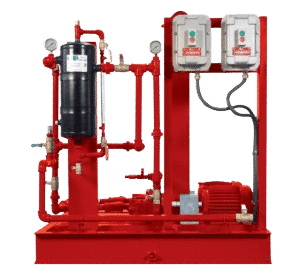
Fuel Filtration Systems
Our range of fuel filtration systems is designed to enhance and simplify your operations, saving you time and costs and ensuring a cleaner and safer working environment.